EAGE Digital 2027

Side Activities

Side Activities

Join us for a dynamic lineup of side activities at EAGE Digital 2027, designed to enrich your conference experience with opportunities for professional growth and collaboration. Dive into specialized short courses and  hackathons tailored to enhance your skills and provide deeper insights into the digital transformation shaping the energy industry.

See all the side activities below

EAGE Digital Side Activities

Short Course 1

Date Thursday 18 March 2027

Time 09:00 – 17:00 CEST​

A Dive in AI & Machine Learning for Geoscientists

Instructor Claude Cavelius
DeepLime

As the geoscience field evolves, artificial intelligence (AI) and machine learning (ML) techniques are becoming an essential pillar of innovation. This course is specifically designed for geoscientists interested in harnessing the power of AI and ML to tackle practical challenges in their work. 

Over two days, participants will gain a foundational understanding of AI and ML principles, coupled with hands-on experience to apply these techniques to real-world geoscientific problems. Python programming language will be intensively used.

The course will kick off with an introduction to the fundamental principles of AI and machine learning. Participants will learn about the workflow involved in implementing AI/ML solutions, from data collection and preparation to model training and evaluation. This foundational knowledge is crucial for understanding how AI/ML can be effectively applied in geoscience contexts.

We will delve into how AI and ML techniques can specifically address “geos” issues. Whether it’s predicting well production profiles or extracting geological information from text, the applications are vast and varied. By understanding the unique challenges faced by geoscientists, participants will be better equipped to implement AI/ML solutions that are not only innovative but also practical and applicable to their specific fields.

A significant portion of the course will be dedicated to hands-on learning in the AI/ML playground. Participants will engage in practical exercises covering essential topics such as:

  • Data Standardization: understanding the importance of uniform data formats and structures for effective analysis;

  • Data Balancing: techniques to handle imbalanced datasets, ensuring more reliable model performance;

  • Dataset Size: strategies for determining the optimal size of datasets for training models;

  • Overfitting: recognizing and addressing overfitting issues to enhance model generalization.

We will also cover both regular machine learning techniques and deep learning methodologies. Through practical exercises focused on well data, participants will gain experience in applying these techniques to real datasets.

To solidify learnings, participants will explore two specific use cases from the following list:

  • Rock/facies image recognition using a pre-trained Convolutional Neural Network;

  • Well production profile prediction;

  • Machine learning on well data for facies prediction;

  • Geological information extraction from text using Natural Language Processing (NLP) techniques.

Following the exploration of these use cases and if the course format allows (in presence), participants will engage in a team contest focused on one of the selected items. This collaborative exercise will involve data collection, data preparation, and the practical application of AI/ML techniques to train and evaluate models. Teams will present their findings, showcasing their understanding of the course material and the innovative solutions they have developed. This hands-on approach reinforces theoretical concepts and fosters teamwork and collaborative problem-solving. 

By the end of this course, participants will have acquired valuable insights into AI and machine learning techniques tailored for the geoscience industry. They will be equipped with the skills needed to implement these powerful tools in their work, driving efficiency and innovation in their endeavors.

Participants’ Profile

This course is designed for geoscientists, engineers, and data enthusiasts who are looking to explore the potential of artificial intelligence (AI) and machine learning (ML) in the geoscience industry. It is ideal for those who have little to no prior experience with AI/ML but are eager to learn how these technologies can help them analyze complex datasets, automate workflows, and solve real-world problems. Participants should have a curiosity for data analysis and a willingness to engage in hands-on exercises that will enable them to apply AI/ML techniques directly to their field of work

Prerequisites

Participants should have a basic understanding of Python programming, as the course involves coding exercises and practical applications of AI/ML techniques. While advanced Python skills are not necessarily required, familiarity with data manipulation and visualization using Python libraries such as Pandas, GeoPandas, Matplotlib, Plotly,and Seaborn will definitely help participants get the most out of the course.

About the Instructor

Claude Cavelius holds a Master’s degree in Numerical Geology from the École Normale Supérieure de Géologie (Nancy, France), earned in 2007. A geologist by training, Claude has always been passionate about software development, technology and innovation. He began his career at Chevron, where he spent 9 years as a software engineer and research geologist. During this time, he specialized in geostatistics and structural geology, contributing to the development of advanced geological models and tools to support exploration and production activities. Claude’s dual expertise in geology and programming allowed him to bridge the gap between complex geoscientific challenges and efficient software solutions.

In 2016, Claude joined Belmont Technology as the product manager, where he focused on delivering advanced, cloud-based AI solutions tailored for the oil and gas industry. His role involved designing and implementing AI-driven tools that enabled more efficient data analysis and decision-making, helping clients optimize their operations through innovative technology.

Today, Claude serves as the CEO/CTO of DeepLime. DeepLime operates at the the crossroads of geology, IT, and data science, empowering businesses by unlocking the full potential of their geological data. Claude leads the software development team, which focuses on creating cutting-edge tools and solutions that transform the way geoscientists work.

Hackathon

Date Thursday 12 March 2026

Time 09:00 – 17:00 CEST

PowerMix Hackathon: Design a Country-Scale Energy Mix

Instructor Name Company

The EAGE Digitalization 2026 Hackathon challenges participants to turn open energy data into an actionable national-scale plan for the future of power generation. Using public datasets and transparent techno-economic assumptions, teams will determine how many renewable assets (solar panels and wind farms) and non-renewable resources (oil and gas production wells) should be deployed to meet a country’s hourly electricity demand at the lowest possible cost, while staying within a defined CO₂ budget. The event blends real-world data science with energy-system modelling and optimization, requiring participants to balance cost, emissions, and reliability through different analytical approaches, and to defend their final plan with quantitative evidence.

Participants will learn hands-on techniques in open energy-system modelling, grasp the tangible trade-offs between levelized cost of energy (LCOE), CO₂ emissions, renewable versus non-renewable shares, and system reliability, and will be encouraged to ensure transparency, reproducibility, and sensitivity testing (for example, by varying CO₂ prices or fuel costs).

Field Trip ​

Date Thursday 12 March 2026

Time 09:00 – 17:00 CEST

Geology meets technology: from rock in the core store to digital data

University of Stavanger

Field Trip Leader

  • Arild N. Nystad, Coordinator AI Ecosystem in E&P

The field trip will start at the University of Stavanger where participants will explore AI-driven Innovation in Oil & Gas Value Chain. Topics that will be covered include: Emerging AI Technologies for Energy & Petroleum, Data-driven Production Optimization – Industry Case, AI in Subsurface Resource Management and more. 

Stratum Reservoir

Field Trip Leaders

  • Erik Hammer, Advanced Exploration Geologist, AkerBP
  • Christophe Germay, CEO, Epslog
  • Jenny Omma, Senior Technical Advisor, Stratum Reservoir​

The field trip will continue to Stratum Reservoir core store. Participants will gain a detailed overview of the advanced methodologies used to convert conventional core material into high-quality digital datasets that support enhanced reservoir evaluation.

It will focus on the Epslog CoreDNA multi-sensor continuous core scanning system and Stratum’s associated digital sample analysis workflows (e.g. automated mineralogy & digital petrography), demonstrating how these technologies enable more efficient data acquisition, improved core characterization, and robust subsurface interpretation.

A case study from Aker BP’s NCS portfolio will be used to illustrate practical implementation, data integration, and interpretation within an operational context.

Field Trip ​

Date Sunday 8 March 2026

Time 12:00 – 15:00 CEST

Walking City Tour Including Norwegian Petroleum Museum

Stavanger is a city where historic seafaring traditions meet modern industrial innovation. The city walking tour provides an opportunity for participants to enjoy a relaxed day of networking while exploring the charming cobblestone streets as you learn about Stavanger’s history, architecture, customs and cuisine.

At the Petroleum Museum, interactive exhibits and rig models showcase how “black gold” transformed Norway into an energy leader. You can discover the engineering feats of the North Sea oil boom and even experience a simulated emergency escape chute. It’s a compelling destination for understanding both Norway’s heritage and its future.

The tour will depart from the Clarion Air Hotel with an alternate meeting point in the city centre of Stavanger.

Short Courses

The EAGE Digitalization Conference features short courses led by carefully chosen renowned instructors, designed to equip professionals and academics with essential knowledge on the latest advancements in the field.

Secure an All-Access Pass to participate in these exclusive short courses!

Attending_group-listening

Short Course 1

Date Thursday 12 March 2026

Time 09:00 – 17:00 CEST​

Language Models for Geoscience Applications

Instructor Dr Thomas Bartholomew Grant
Domain Expert
Cegal

The course will explore the potential of Generative AI (Gen-AI) for geoscience. By examining the key concepts of large language models, and real-world applications of them, participants will gain insights into how these cutting-edge technologies are being used to solve complex geoscience challenges. The course material is aimed at geoscientists that are looking to use AI applications and want a better understanding of how they work, how to get the best out of them and how to critically evaluate their performance.

The course will begin by covering the basic concepts for understanding generative AI and Large Language Models (LLMs), including data embedding, benchmarking, and the mechanics of transformer architectures. The second section of the course will take a deeper look into advanced techniques and methodologies, including retrieval augmented generation (RAG), agents, and improving model results through prompting and grounding. 

Finally, the participants will apply the course content to examine critical discussions for the ethical use of generative AI, cybersecurity concerns, and the necessary regulatory frameworks governing AI deployment in geoscience.

Two group discussion sessions during the day include problem-solving tasks that apply the course material to real-world problems.

Course objectives

  • Understand the main use cases of generative AI for geoscience data
  • Cover the main concepts of how language models work and common architectures for building chat-bots and agents. 
  • Critical evaluation of model outputs and techniques for improving results.
  • Highlight considerations for safe and ethical use of generative AI.

Hackathons

We are excited to invite you to groundbreaking Hackathons that promises to inspire, challenge, and redefine possibilities with GenAI in geoscience! Whether you’re a seasoned data scientist, a geoscience professional, or a tech enthusiast with a passion for innovation, this event offers the perfect opportunity to showcase your talents, collaborate with like-minded individuals, and shape the future of geoscience through cutting-edge technology.

Smiling_group-attending-course

Hackathon

Date Thursday 12 March 2026

Time 09:00 – 17:00 CEST

PowerMix Hackathon: Design a Country-Scale Energy Mix

Instructor Name Company

The EAGE Digitalization 2026 Hackathon challenges participants to turn open energy data into an actionable national-scale plan for the future of power generation. Using public datasets and transparent techno-economic assumptions, teams will determine how many renewable assets (solar panels and wind farms) and non-renewable resources (oil and gas production wells) should be deployed to meet a country’s hourly electricity demand at the lowest possible cost, while staying within a defined CO₂ budget. The event blends real-world data science with energy-system modelling and optimization, requiring participants to balance cost, emissions, and reliability through different analytical approaches, and to defend their final plan with quantitative evidence.

Participants will learn hands-on techniques in open energy-system modelling, grasp the tangible trade-offs between levelized cost of energy (LCOE), CO₂ emissions, renewable versus non-renewable shares, and system reliability, and will be encouraged to ensure transparency, reproducibility, and sensitivity testing (for example, by varying CO₂ prices or fuel costs).

Field trips

Lorem ipsum dolor sit amet, consectetur adipiscing elit. Curabitur cursus metus sit amet lorem volutpat vehicula. Pellentesque quis neque tortor. Maecenas faucibus, enim vitae mattis convallis, sapien turpis viverra augue, ut porta purus justo vitae velit. Suspendisse sed neque dolor. Integer imperdiet, velit vel vestibulum elementum, eros eros lacinia ligula, non viverra metus justo eget urna. 

Orci varius natoque penatibus et magnis dis parturient montes, nascetur ridiculus mus. Mauris maximus tempor nunc vestibulum consequat.

placeholder.png

Field Trip ​

Date Thursday 12 March 2026

Time 09:00 – 17:00 CEST

Geology meets technology: from rock in the core store to digital data

University of Stavanger

Field Trip Leader

  • Arild N. Nystad, Coordinator AI Ecosystem in E&P

The field trip will start at the University of Stavanger where participants will explore AI-driven Innovation in Oil & Gas Value Chain. Topics that will be covered include: Emerging AI Technologies for Energy & Petroleum, Data-driven Production Optimization – Industry Case, AI in Subsurface Resource Management and more. 

Stratum Reservoir

Field Trip Leaders

  • Erik Hammer, Advanced Exploration Geologist, AkerBP
  • Christophe Germay, CEO, Epslog
  • Jenny Omma, Senior Technical Advisor, Stratum Reservoir​

The field trip will continue to Stratum Reservoir core store. Participants will gain a detailed overview of the advanced methodologies used to convert conventional core material into high-quality digital datasets that support enhanced reservoir evaluation.

It will focus on the Epslog CoreDNA multi-sensor continuous core scanning system and Stratum’s associated digital sample analysis workflows (e.g. automated mineralogy & digital petrography), demonstrating how these technologies enable more efficient data acquisition, improved core characterization, and robust subsurface interpretation.

A case study from Aker BP’s NCS portfolio will be used to illustrate practical implementation, data integration, and interpretation within an operational context.

Field Trip ​

Date Sunday 8 March 2026

Time 12:00 – 15:00 CEST

Walking City Tour Including Norwegian Petroleum Museum

Stavanger is a city where historic seafaring traditions meet modern industrial innovation. The city walking tour provides an opportunity for participants to enjoy a relaxed day of networking while exploring the charming cobblestone streets as you learn about Stavanger’s history, architecture, customs and cuisine.

At the Petroleum Museum, interactive exhibits and rig models showcase how “black gold” transformed Norway into an energy leader. You can discover the engineering feats of the North Sea oil boom and even experience a simulated emergency escape chute. It’s a compelling destination for understanding both Norway’s heritage and its future.

The tour will depart from the Clarion Air Hotel with an alternate meeting point in the city centre of Stavanger.

Registration is open

Discover the future of digitalization by joining our engaging workshops, interactive short courses, and exciting field trips! Each activity is designed to expand your expertise and connect you with industry leaders. Explore hands-on learning and innovative approaches that put digital transformation at the forefront. Don’t miss out—boost your skills and be part of the digital revolution with us!

DigiDivider_bottom_200
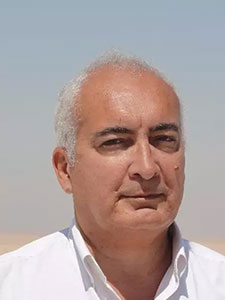
Dr-Dominique-Guerillot

Dominique Guérillot

President & CEO TERRA 3E

Prof. Dr Dominique Guérillot, former member of the Executive Committee of IFP and Program Director for the Upstream R&D of Saudi Aramco, he is focusing in Oil and Gas Exploration and Production including Unconventional, CO2 EOR and Carbon storage. After a PhD in Applied Mathematics, he joined IFP in 1982 in the Reservoir Engineering Dpt.

He started his career in the Exploration and Production sector developing Expert system for selecting EOR methods and Advanced Compositional Reservoir Simulators for EOR (CO2 and thermal methods).

In 1985, he began cooperating with geologists and he invented with the Paris School of Mines the first software package integrating reservoir characterization and flow simulations in porous media proposing innovative methods for upscaling absolute permeabilities.

After being the Director of the Geology and Geochemistry (95-01, in 2001, he became member of the Executive Committee of IFP and Managing Director of Exploration and Reservoir Engineering Centre with a total budget of 30 Millions of Euros. Consequently, IFP nominated him as board member of several Exploration and Production subsidiaries of IFP: Beicip-Franlab and RSI in France, IFP MEC in Bahrain, etc. He developed new strategic orientations for the business unit he was in charge modifying its business model to generate revenues based on royalties through the development of several strategic marketed software for IFP.

In 2009, he created a Young Innovative Company (YIC), Terra 3E, in Energy and Environment: http://www.Terra3E.com developing innovative plug-ins in Petrel software among which the first tool for accurate calculations of fluids in place for gas and oil shales and upscaling transmissivities. From 2010 to 2013, he was senior expert for Petrobras, Brazil.

In 2012, he served the European Commission for selecting R&D projects on CO2 Storage. In 2013, Qatar Petroleum called Dominique Guérillot for developing their R&D Centre at the Qatar Sciences and Technology park in Doha, Qatar. He is currently full professor at Texas A&M University in their campus of Qatar.

He published more than 50 full and refereed papers, holds 5 patents, is member of the IJOGCT editorial team, the SPE and EAGE associations, is referee of the Oil & Gas Science and Technology (OGST), and member of the editorial board of the Petroleum Geoscience journal of the Geological Society.

Message will be send to corporate relations

Message will be send to the exhibition department

Message will be send to the registration department

Message will be send to the Europe department

Message will be send to the abstracts department