As the geoscience field evolves, artificial intelligence (AI) and machine learning (ML) techniques are
becoming an essential pillar of innovation. This one day short course is specifically designed for geoscientists interested in harnessing the power of AI and ML to tackle practical challenges in their
work.
Over the short course, participants will gain a foundational understanding of AI and ML principles,
coupled with hands-on exercises to apply these techniques to real-world geoscientific problems.
Python programming language will be intensively used.
The day will kick off with an introduction to the fundamental principles of AI and machine learning.
Participants will learn about the AI/ML pipeline implementation, from data collection and preparation
to model training and evaluation. This foundational knowledge is crucial for understanding how AI/ML
can be effectively applied in geoscience contexts.
We will then delve into how AI and ML techniques can specifically address “geos” issues. Whether it’s
predicting well production profiles or extracting geological information from text, applications are vast
and varied. By understanding the unique challenges faced by geoscientists, participants will be better equipped to implement AI/ML solutions that are not only innovative but also practical and applicable to
their specific fields.
A significant portion of the course will thus be dedicated to hands-on learning through practical examples. By the end of the day, participants will be equipped with the skills needed to implement these powerful tools in their work.
Short Course Outline
Morning: AI/ML Foundations & Subsurface Data Preparation
● Introduction to the ML pipeline in Geosciences (ML vs. classical geostatistics/physics)
● Geoscientific Exploratory Data Analysis (handling spatial data, missing well logs, outliers with Pandas, Seaborn, Plotly, etc.)
● Feature Engineering & Data Preprocessing: standardization, handling spatial/facies imbalance, and train/test leakage risks in spatial data.
Afternoon: Practical Application & Discussion
● Building predictive models: Baseline classifiers (Scikit-Learn) vs. Neural Networks (Keras/TensorFlow)
● Final practical exercise: end-to-end facies prediction from well log data
● Model evaluation
● Wrap-up and open discussion
Participants’ Profile
This course is designed for geoscientists, engineers, and data enthusiasts who are comfortable with basic Python programming but new to AI and Machine Learning techniques. It is ideal for those eager to learn how these technologies can help analyze complex datasets, automate workflows, and solve
real-world subsurface problems. Participants should bring a curiosity for data analysis and a willingness to engage in hands-on coding exercises to apply AI/ML techniques directly to their work.
Prerequisites
● Participants should have an intermediate level in Python programming, as the course involves coding exercises and practical applications. While advanced Python skills are not necessarily required, familiarity with data manipulation and visualization using Python libraries such as Pandas, GeoPandas, Matplotlib, Plotly,and Seaborn will definitely help participants get the most out of the course.
● Participants must have a working Python environment already setup (Anaconda, UV, Virtualenv, etc.).
About the Instructor
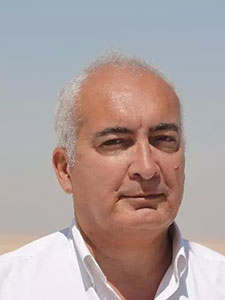
Claude is a geologist, AI innovator, and software architecture specialist working at the intersection of
geosciences and advanced software engineering.
He graduated with a Master’s degree in Numerical Geology from École Normale Supérieure de Géologie (Nancy, France) in 2007. Blending deep domain knowledge with a lifelong passion for technology, Claude has spent nearly two decades bridging the gap between complex geoscientific
challenges and high performance software engineering.
Claude began his career at Chevron, where he spent 9 years as a software engineer and research geologist. During this time, he specialized in geostatistics and structural geology, contributing to the
development of advanced geological models and tools to support exploration and production activities. In 2016, Claude joined Belmont Technology as the product manager, where he focused on
delivering advanced, cloud-based AI solutions tailored for the oil and gas industry. His role involved designing and implementing AI-driven tools that enabled more efficient data analysis and decision-
making, helping clients optimize their operations through innovative technology.
Claude possesses very strong expertise in Python development, modern AI innovation, and end-to-
end software architecture. He specializes in designing and implementing fully automated Python-
based workflows specifically tailored for geosciences. His technical work focuses on transforming
unstructured domain knowledge into scalable, automated data pipelines, custom algorithm
development, and decision-support tools that directly solve client-specific operational bottlenecks.
Today, Claude serves as the CEO/CTO of DeepLime. He leads the software development team,
which focuses on creating cutting-edge tools and solutions that transform the way geoscientists work.