EAGE Digital 2027

AI Supercomputing Dedicated Sessions

Dedicated
Session 1

Date Monday 9 March 2026

Time 13:50 – 15:00

Geoscience data and workflows

Modern geoscience applications generate and process unprecedented volumes of data, from seismic acquisition and imaging to reservoir modeling, digital twins, and AI-driven interpretation. Efficient management, movement, and analysis of these datasets are becoming critical challenges for both HPC and cloud environments.

This session focuses on data-intensive geoscience workflows and the technologies that enable them. Topics include data lakes, high-performance I/O, streaming and real-time data processing, scalable storage architectures, metadata management, workflow orchestration, and hybrid cloud-HPC data platforms.

Moderators

Federico Golfre’ Andreasi SLB

Matteo Ravasi Shearwater

Speakers

Cen Li Senior Data Scientist , SLB

Amik St-Cyr Business Developer and HPC Expert, AlgoDoers

Jaime Cruise Business Line Director Data, SLB

Sean Mackie Senior Technical Business Development, AWS

Dedicated
Session 2

Date Monday 9 March 2026

Time 16:15 – 17:55

Open HPC Orchestration: Multi-Partner Subsurface Computing

For decades, seismic imaging and processing has been tied to single-vendor infrastructure and proprietary algorithms — a model that creates resource bottlenecks and prevents operators from combining the best available solutions. This session explores open orchestration frameworks that reimagine seismic imaging and processing as decoupled, independently scaling building blocks. Commercial algorithms, open-source frameworks, and proprietary research run side-by-side in the same pipeline, letting geoscientists compose optimal workflows for RTM and FWI. Together, these frameworks unify a multi-partner subsurface ecosystem — accelerating time-to-insight while preserving full vendor and framework independence.

Moderator

Yuriy Gubanov Worldwide Principal Partner Solutions Architect – Energy AWS, AWS

Speakers

Dima Kniazev Principal, Energy Consulting, EPAM

Faisal Asif Global Head of Digital Strategy, Cloud Transformation & Innovation, TGS

Nikhil Shah CEO, S-Cube

Michele Isernia Head of Strategy, ThinkOnward

Panel Discussion

Mikhail Gurevich Chief technologist, Global Energy manging principal, EPAM

Nikhil Shah CEO, S-Cube

Michele Isernia Head of Strategy ThinkOnward

Dedicated
Session 3

Date Tuesday 10 March 2026

Time 15:55 – 17:15

HPC Visualization: Interactive Access to Simulation-Scale Data

Simulation and imaging datasets have outgrown the machines we use to look at them. The interpretation workstation — a specialized, graphics-heavy box beside the geoscientist — assumes the data can come to the desk, but at terabyte and petabyte scale that assumption no longer holds: moving volumes to a local machine is slower, costlier, and harder to secure than moving the visualization to the data. This session examines how cloud VDI is replacing the interpretation workstation, streaming GPU-accelerated remote sessions that run right beside the HPC cluster. Geoscientists gain on-demand, elastically provisioned, secure visualization co-located with simulation-scale data — collapsing the distance between where results are computed and where they are explored.

Moderator

Yuriy Gubanov Worldwide Principal Partner Solutions Architect – Energy AWS, AWS

Speakers

Randy Foster Vice President of Sales, Channel and Alliances, Leostream

Pål Hovdenak Sales Director, Cegal AS

Mikhail Gurevich Chief Technologist – Energy, EPAM

Panel Discussion

Moderator

Christine Rhodes Partner Segment Lead Oil and Gas, Leostream

Randy Foster Vice President of Sales, Channel and Alliances, Leostream

Pål Hovdenak Sales Director, Cegal AS

Mikhail Gurevich Chief Technologist – Energy, EPAM

Dedicated
Session 4

Date Tuesday 10 March 2025

Time 13:50 – 15:30

Optimizing Geoscience HPC Workloads: Performance, Scalability and Cost

Geoscience workloads continue to grow in scale and computational complexity, creating increasing demands on HPC resources. This session explores practical strategies for optimizing geoscience HPC workloads across on-premises, cloud and hybrid environments, with a focus on improving performance, scalability and cost efficiency. Topics may include compute and cost optimization, storage and I/O performance, GPU acceleration, workflow orchestration and automation, and approaches for efficiently matching workloads to available resources. The session will highlight practical experiences, lessons learned and real-world results demonstrating how optimization strategies can improve the efficiency and performance of geoscience computing.

Moderator

Sadok Exploration Data & Geosolutions Global HPC Manager, SLB

Speakers

Kun Jiao Energy Principal Solutions Architect, AWS

Paresh Sharda Cloud & AI Specialist Director, Microsoft

Galen Joneja Key Account Executive, Google Cloud

James Hobro Principal HPC Scientist, SLB

Alex Loddoch HPC Strategist, Chevron

Nefeli Moridis Global Head of Subsurface Energy, Nvidia

Margarita Kongawoin Senior Vice President of Software and HPC, DUG

Vanessa Goh Seismic Imaging Innovation Program Lead, Shell

Dedicated
Session 5

Date Tuesday 10 March 2026

Time 13:50 – 15:30

The Future of HPC Software: Modernization, Portability and Agentic Coding

Scientific and engineering applications must evolve to exploit new computing architectures while remaining performant, portable and maintainable. This session explores modern HPC software development, from code modernization, performance optimization and portability across CPUs and GPUs to emerging approaches such as agentic coding and domain-specific languages. It considers how these technologies could reshape the development and modernization of long-lived seismic imaging, reservoir simulation and other subsurface HPC applications.

Moderator

Gareth O’Brien Principal Program Manager, Microsoft

Doug Norton Chief Marketing Officer, HPC-AI Society

Speakers

Gerard Gorman CEO & Co-founder, Devito Codes

Nassim Dahmani Full-stack Software Engineer, SLB

John Holden Business Development, NextSilicon

Lorenzo Casasanta Principal Researcher, Shearwater

John Brittan Vice president Geophysics, TGS

Frederic Broust Head of Scientific Computing, TotalEnergies

Dedicated
Session 6

Date Wednesday 11 March 2026

Time 15:55 – 17:15

HPC as a Service: Balancing Control, Cost and Business Value

HPC powers some of the energy sector’s most demanding digital workflows, but creating value requires more than simply adding compute capacity. This session explores how subsurface organisations can choose the right balance between IaaS, PaaS and SaaS for seismic processing and imaging, subsurface modelling, reservoir simulation and other computationally intensive workflows. It will examine where organisations benefit from owning and controlling specialist HPC infrastructure and software, and where managed platforms and services can reduce operational complexity and allow domain teams to focus on science and business outcomes. The discussion will consider the trade-offs between performance, scalability, cost, control, software requirements and operational responsibility, alongside the role of cloud elasticity, GPUs and hybrid architectures. Ultimately, the session asks a practical question: which HPC capabilities should organisations own, which should they consume as a service, and where does each model create the greatest business value?

Moderators

Gareth O’Brien Principal Program Manager, Microsoft

Doug Norton Chief Marketing Officer, HPC-AI Society

Speakers

Hussein Shel Director- Energy, Oil & Gas Market Lead, Google

Jamie Cruise Business Manager – Agentic DMaas, SLB

Geraud Delaporte Head of Information Technology Department – Subsurface, TotalEnergies

Elizabeth L’Heureux Principal Head of HPC, BP

Sharon Howe VP Business Support, Viridien

Frode Odinsen Senior Program manager, Microsoft

Dedicated
Session 7

Date Wednesday 11 March 2026

Time 15:55 – 17:15

Green Supercomputing and AI for Sustainable Resource Management

The increasing use of artificial intelligence, numerical simulation, and large-scale data analytics is driving unprecedented demand for computing resources across the geoscience industry. As organizations expand their HPC and AI infrastructures, sustainability has become a critical consideration.
This session focuses on strategies for designing and operating environmentally sustainable supercomputing facilities. Topics include energy-efficient computing systems, advanced cooling technologies, water and power optimization, renewable energy integration, and methods for reducing the environmental footprint of large-scale computing.The session will also explore the role of AI in enabling intelligent resource management, including workload scheduling, energy optimization, predictive maintenance, and autonomous operations.

Moderators

Gareth O’Brien Principal Program Manager, Microsoft

Doug Norton Chief Marketing Officer, HPC-AI Society

Speakers

Alessandro D’Auria HPC Admin, ENI

Elies Bergounioux HPC project manager TotalEnergies

Sven Oehme CTO, DDN

Dr-Dominique-Guerillot

Dominique Guérillot

President & CEO TERRA 3E

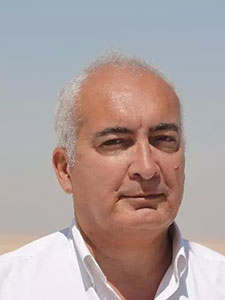
Prof. Dr Dominique Guérillot, former member of the Executive Committee of IFP and Program Director for the Upstream R&D of Saudi Aramco, he is focusing in Oil and Gas Exploration and Production including Unconventional, CO2 EOR and Carbon storage. After a PhD in Applied Mathematics, he joined IFP in 1982 in the Reservoir Engineering Dpt.

He started his career in the Exploration and Production sector developing Expert system for selecting EOR methods and Advanced Compositional Reservoir Simulators for EOR (CO2 and thermal methods).

In 1985, he began cooperating with geologists and he invented with the Paris School of Mines the first software package integrating reservoir characterization and flow simulations in porous media proposing innovative methods for upscaling absolute permeabilities.

After being the Director of the Geology and Geochemistry (95-01, in 2001, he became member of the Executive Committee of IFP and Managing Director of Exploration and Reservoir Engineering Centre with a total budget of 30 Millions of Euros. Consequently, IFP nominated him as board member of several Exploration and Production subsidiaries of IFP: Beicip-Franlab and RSI in France, IFP MEC in Bahrain, etc. He developed new strategic orientations for the business unit he was in charge modifying its business model to generate revenues based on royalties through the development of several strategic marketed software for IFP.

In 2009, he created a Young Innovative Company (YIC), Terra 3E, in Energy and Environment: http://www.Terra3E.com developing innovative plug-ins in Petrel software among which the first tool for accurate calculations of fluids in place for gas and oil shales and upscaling transmissivities. From 2010 to 2013, he was senior expert for Petrobras, Brazil.

In 2012, he served the European Commission for selecting R&D projects on CO2 Storage. In 2013, Qatar Petroleum called Dominique Guérillot for developing their R&D Centre at the Qatar Sciences and Technology park in Doha, Qatar. He is currently full professor at Texas A&M University in their campus of Qatar.

He published more than 50 full and refereed papers, holds 5 patents, is member of the IJOGCT editorial team, the SPE and EAGE associations, is referee of the Oil & Gas Science and Technology (OGST), and member of the editorial board of the Petroleum Geoscience journal of the Geological Society.

Message will be send to corporate relations

Message will be send to the exhibition department

Message will be send to the registration department

Message will be send to the Europe department

Message will be send to the abstracts department